


Sewage Cleanup in Omaha, Nebraska
Sewage in a basement, bathroom, laundry room, crawl space, or business needs prompt, controlled cleanup. Our team removes wastewater, evaluates damaged materials, cleans affected surfaces, and helps you plan repairs. We serve homeowners, landlords, property managers, and commercial property owners.
Keep children and pets away from the affected area. Do not touch standing sewage or track it through the building. If it is safe, stop the source without entering contaminated water, then contact our team for a safety assessment. We document the affected areas so you understand what needs extraction, cleaning, drying, removal, or repair.
We start by looking for the source and checking safety concerns. A sewer backup, drain blockage, failed pipe, damaged lateral, sump problem, or heavy rain can change the work plan. Source control comes first so additional wastewater does not enter the property.
Need Restoration Help in Omaha? Call (402) 796-6250
Our technicians inspect the source and the path the contamination took before work begins. We use personal protective equipment, take photos, record moisture readings, and explain the work in clear terms. IICRC certified techs provide a careful plan for properties in areas such as Benson, Dundee, and South Omaha, where access, finished spaces, and connected rooms can change how cleanup is handled.
How Our Sewage Cleanup Process Works
Next, we use extraction equipment to remove standing sewage and water. We inspect carpet, pad, drywall, insulation, flooring, baseboards, cabinets, framing, and contents. Materials that cannot be safely cleaned are removed and documented. This inspection also helps us find moisture that has moved behind walls or below finished floors.
We clean and disinfect surfaces that can remain in the building. Containment helps limit the spread of contaminated material through the property. Air scrubbers may support this work when the site conditions call for them, while personal protective equipment protects the crew during removal and cleaning.
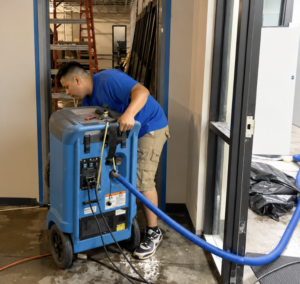
After cleaning, we place air movers and dehumidifiers based on the moisture readings. Moisture meters help us check walls, floors, framing, and other materials. We monitor those readings during the drying process and adjust equipment placement as the building dries.
Once the affected areas are clean and dry, we review repair needs with you. Repairs may include drywall, flooring, trim, insulation, or other finishes. We explain what we found and keep records of the work for your property files.
Commercial Sewage Cleanup in Omaha
Commercial properties may have occupied rooms, shared entrances, stored inventory, equipment, and tenant spaces close to the loss. Our team plans work zones and equipment placement around safe access and business operations. Warehouses, offices, retail spaces, and mixed-use buildings often need staged cleanup so unaffected areas remain usable.
Property managers and business owners receive clear updates about affected areas, moisture readings, removed materials, and repair needs. That documentation helps organize decisions across tenants, maintenance staff, and ownership without treating every room as if it has the same level of damage.
Related Cleanup Needs After a Property Loss
Sewage cleanup can leave damaged contents and building materials that need separate repair decisions. If fire or smoke damage is also present, our fire damage cleanup team can address that part of the loss. Materials that remain damp after wastewater removal may also need mold removal planning. For a lower-level water event without sewage contamination, our Flooded Basement cleanup service follows a different assessment and cleaning plan.
For immediate sewage cleanup help in Omaha, call (402) 796-6250 to discuss what happened and the next steps for your property.
Water Damage Cleanup Pricing
Sewage cleanup pricing depends on the source, affected areas, materials, contents, and drying work. We assess the property first and explain the recommended scope before restoration moves forward.
- Small water loss: $1,000–$3,000
- Moderate water loss: $3,500–$7,500
- Large water loss: $7,500–$15,000+
These prices are general reference points and are not a quote or estimate for a specific property. Actual restoration costs depend on the source and category of water, affected square footage, materials involved, length of exposure, equipment needs, demolition, cleaning, drying time, and repairs. A complete price estimate requires an onsite inspection because the final scope depends on the actual conditions at the property.
Frequently Asked Questions
What should I do first after a sewage backup?
Keep children and pets away from the affected area and avoid touching standing sewage.
Can sewage-damaged carpet and drywall be cleaned?
Some materials can be cleaned and disinfected, but porous materials that cannot be safely restored are removed. We inspect carpet, pad, drywall, insulation, flooring, and contents before making that decision.
How do you find hidden moisture after sewage removal?
We use moisture meters to check walls, floors, framing, and other building materials. Those readings guide equipment placement and help us track drying beyond the area where wastewater was visible.
Do you handle sewage cleanup in rental and multifamily properties?
Yes. We work with landlords and property managers on access, tenant communication, shared plumbing, affected units, and repair documentation.
Can a business stay open during sewage cleanup?
Some businesses can keep unaffected areas open while work is staged. We plan work zones, equipment placement, and access around occupants, inventory, equipment, and tenant spaces.
What causes a sewage backup?
Common causes include sewer backups, drain blockages, failed pipes, damaged sewer laterals, sump problems, and heavy rain. We inspect the source because it affects the cleanup plan.
How do you prevent contaminated water from spreading?
We control the source, set work limits around affected areas, and use containment when the site requires it. The crew also uses personal protective equipment during extraction, removal, and cleaning.
What happens after sewage cleanup is finished?
We review drying results and repair needs with you. The next work may include replacing drywall, flooring, trim, insulation, or other finishes, and we provide records of the cleanup.